

Iran, Persian Language & Culture
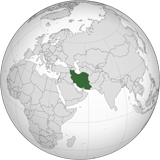
Iran's Geography & Environment: Situated in southwestern Asia, Iran shares borders with Afghanistan, Armenia, Azerbaijan, Iraq, Pakistan, Turkey, and Turkmenistan, with Kazakhstan and Russia forming its northern boundaries through the Caspian Sea. To the south, it is neighbored by the United Arab Emirates, Kuwait, Qatar, Bahrain, Oman, and Saudi Arabia via the Persian Gulf. Comparable in size to Alaska, Iran experiences a diverse climate, with winters in the north and west characterized by cold temperatures and heavy snowfall from December through January. Spring and fall bring milder weather, while summers are hot and dry. Conversely, winters in the south are mild, with scorching summers dominating the climate. Overall, Iran's climate is arid, with most rainfall occurring between October and April.

Here are some quick facts about Iran:
Area: 1,648,195 km2
Capital: Tehran تهران ocated in the mid-north of Iran, less than 100 miles south of the Caspian Sea, is a metropolitan city serving as the political, administrative, industrial, and commercial capital, with a population nearing nine million people.
Time Difference: UTC+3.5
Terrain: The terrain varies from rugged and mountainous in the north and west to desert in the central plateau.
Lowest Point: Caspian Sea: -28 m دریای خــزر
Highest Point: Mount Damavand: 5,671 m دمــاوند
Natural Resources: Iran boasts abundant petroleum, natural gas, coal, chromium, uranium, copper, iron ore, lead, manganese, zinc, and sulfur reserves.
Cities: With 31 provinces, some of Iran's most significant cities include Tehran, Isfahan, Mashhad, Shiraz, Tabriz, Yazd, Kerman, Kashan, and Rasht.
Open Sea: Persian Gulf and Sea of Oman– connected to Indian Ocean خلیج فارس – دریای عــمان
Ports: Notable ports include Anzali and Astara in the north (Caspian Sea) and Asaluyeh, Bandar Abbas, Bandar Imam, and Boushehr in the south (Persian Gulf).
Deserts: Dasht-e Loot and Dasht-e Kavir
Mountain Ranges: The Alborz runs from the northwest to northeast (with Mount Damavand in the middle), while the Zagros range extends from the northwest to the southwest.
Prairies: Dasht-e Moghan in the northeast.
Rivers: Iranian rivers are typically short with shallow streams. Notable rivers include the Dez, Karkheh, Sefidrud, Zayanderud, Jajorud, and the longest, the Karun, which spans 516 miles. Three rivers form parts of Iran's international boundaries: the Aras River with Armenia and Azerbaijan, the Atrek River with Turkmenistan, and the Arvandrud River with Iraq.
|
Timeline history of Iran in a nutshell |
|
|
Time |
Historical Events |
|
4000 BC |
Settlements of tribes on the Iranian plateau during the Bronze Age include Hasanlu and Hissar. |
|
2700 - 1600 BC |
Akkadians and Elamites The Elamites adopted Sumerian cuneiform and later transmitted it to the Medes. |
|
1200 BC |
The Medes, Parthians, and Persians settled in Iran |
|
1200 - |
Followers of Zoroaster propagated the Zoroastrian faith, while Dioces established the Median Kingdom in 728 BC. |
|
550 BC |
Cyrus the Great unified the Persians and Medes under the Achaemenian Empire, establishing monotheistic Zoroastrianism as the official religion. The Avesta, consisting of 16 spiritual verses known as the Gathas, was collected as the holy scripture. Notably, Cyrus the Great issued a decree engraved on a cylinder, often regarded as the first human rights charter, granting social and religious freedoms to the conquered Babylonians. Under Cyrus's rule, the Iranian territory expanded from Egypt and Greece in the west to the Hindu Kush in the east. |
|
331 BC |
The invasion of Iran by Alexander the Great marked a significant event in history. Following Alexander's conquest, the Seleucids assumed control of Iran after his demise. However, their rule eventually waned, and Iran fell under the dominion of the Parthians after about a century. |
|
226 - |
During the reign of the Sassanid dynasty, Anushiravan undertook ambitious construction projects, including the development of roads and buildings. Additionally, the establishment of the first ancient Iranian university, Gondishapour, facilitated the training of scholars and furthered intellectual pursuits. |
|
642 |
Iran experienced an invasion by Muslims, leading to the conversion of Iranians to Islam within the span of a century. Arabs capitalized on the rich and scholarly Iranian culture to develop their governance systems. Notably, the first Persian and Arabic grammar was authored by the Iranian scholar Sibawayh. Following the demise of the Prophet Muhammad, the Umayyad Dynasty was established. Tensions arose between the caliph, Muawiya, and Ali, with followers of Ali asserting his rightful claim to the caliphate due to his familial ties as the Prophet's cousin and son-in-law. Ali was assassinated in 661, prompting his son Hossein to challenge the authority of Muawiya's successor, Yazid. In a tragic turn of events, Yazid's forces killed Imam Hossein and some of his Shiite followers. |
|
750 |
The Abbasid caliphate succeeded the Umayyads, establishing Baghdad as its capital. Over the course of 500 years, the Abbasids ruled from Iraq, with Baghdad emerging as the epicenter of Islam. During this period, Shiite Islam experienced a surge in dominance. |
|
819 |
The Samanid dynasty rules Iran as the first Islamic Persian government. |
|
977 |
The Ghaznavid dynasty defeats Samanid. |
|
1055 |
Seljuks seized control of the western half of the empire from the Ghaznavids. |
|
1220 |
Under the leadership of Genghis Khan, the Mongols launched a devastating invasion of Iran, dismantling the existing political system and causing widespread loss of life among the Iranian population. |
|
1380 |
Tartar tribes (present-day Uzbekistan), led by Tamerlane, invaded Islamic territories, resulting in the dismantling of the Islamic government in Iraq. |
|
1502 |
Shah Ismail of the Safavid liberated Iran from Mongol rule and declared Shiite Islam as the official state religion, initiating the construction of a formidable Iranian state. |
|
1580 |
Shah Abbas of Safavid relocated the capital from Qazvin to Esfahan, where he embarked on a monumental construction project with the assistance of the renowned Iranian scholar and architect, Sheykh Baha'i. Under his leadership, Abbas achieved significant military victories, defeating the Ottomans, reclaiming Baghdad, and expelling the Portuguese from the Persian Gulf region. |
|
1722 |
Mahmoud, an Afghan warlord, ended the Safavid dynasty. |
|
1736-1747 |
Nadir Shah Afshar from Khorasan defeats Afghans and restores Iranian rule over Islamic lands. |
|
1750-1779 |
Karim Khan Zand rules parts of Iran centered in Shiraz. |
|
1797-1925 |
Qajar dynasty headed by Agha Mohammad Khan unifies Iran and returns political stability. They choose Tehran as their capital. Iran is defeated in Russian-Persian wars during Fath-ali shah (1804-28) and loses large parts of its northern lands (Azerbaijan, Uzbekistan, Tajikistan, Armenia, Turkmenistan, and etc.). Nasereddin Shah, assisted by his famous minister “Amir Kabir”, assumed the rein of authority and established the first Iranian modern university known as “Dar-ol Fonoon”. Qajars sell minerals and newly discovered petroleum resources to Britain and Russia during 1850s-1900s. In 1906 the Constitution Movement leads to the founding of a parliament known as Majlis. Iran is occupied by British and Russian forces during the first World War of 1914-1918. |
|
1925-1941 |
Reza Shah Pahlavi, a former officer in the Persian Cossack brigade ousts Qajar dynasty. He turns the Cossack brigade into a powerful Iranian force. Inspired by Ata Turk (Turkish secular ruler), he starts to westernize Iran. He asks the League of Nations to refer to the country by its native name, Iran, in 1935. He builds a modern infrastructure and reforms education. He bans use of the Islamic veil by women and enforces that ban. |
|
1941-1945 |
Iran is occupied by the allied forces despite announcing a neutral position in World War II. Reza Shah is sent into exile in favor of his son Mohammad Reza. |
|
1945-1953 |
The National Movement lead by Mossadeq is formed. He nationalized Iranian oil and challenged British claims in the Hague. The US and Britain stage a CIA-engineered coup that ousts Mossadeq. Shah, who left the country, returns and gradually aligns Iran with the West during the Cold War. Shah establishes a powerful secret police called SAVAK. Shah introduces “White Revolution” and initiates land reform acts and literacy corps. Women gain suffrage. Religious protests start, fueled by the approval of the Capitulation law. Ayatollah Khomeini is exiled to Baghdad and Turkey. |
|
1975-1979 |
Shah abandons his monarch role and establishes a one-party system known as “Rastakhiz Party”, giving him still full control of the country. In 1978, demonstrations lead to “Black Friday” massacre of protesters. In September 1978, strikes in oil and heavy-industries leave Iran on the verge of revolution. Shah flees Iran on January 16, 1979; Ayatollah Khomeini returns from exile; Islamic revolution occurs on February 22, 1979. |
|
1979 |
The US Embassy in Tehran is stormed on November 4, 1979 by students; 52 US diplomats are taken hostage for 444 days, souring Iran-US relations. Iranians demand extradition of Shah in exchange of hostages. President Carter ordered a freeze on Iranian assets and stop on oil sales from Iran. This policy failed and eventually Carter approved an operation known as “Eagle Claw” to free the hostages. The operation ended in failure with eight marines killed in Tabas, the desert east of Iran near the border of Afghanistan. |
|
1980-1988 |
Saddam Hossein invades Iran in September 1980. Eight-year war results in an estimated one million deaths and injuries. Ayatollah Khomeini passes away in 1989. |
|
1989 |
Ayatollah Khamenei is elected by the “Experts Assembly” as the new leader. |
|
1997-2005 |
In a landslide election, Khatami is elected as a reformist candidate for presidency. |
|
2005-2013 |
Ahmadinejad is elected president following the dominance of conservatives in the parliament and city counsels. |
|
2014-2018 |
Rouhani is elected president following another reformist movement. A comprehensive nuclear deal is signed between Iran, European economic powers, and the USA during President Obama's term in 2016. President Trump cancels the deal in 2018. |
Persian: is an agglutinative language of an Indo-European origin with an Iranian mother. This language group branches into a number of other languages, including: Kurdish, Zaza-Gorani, Luri, Gilaki, Mazanderani, Semnani, Taleshi, Tati, Pashto, Ossetian, Balochi, etc. For five centuries before the British invasion and colonization of South Asia, Persian was a common second language for many people. Linguists consider three historical periods for the Iranian languages. Old Era (525 BC - 400 BC: The Medes - Achaemenid), Middle Era (400 BC - 900 AD: Sassanid) and Modern Era (900 AD – present).
Old Persian: Old Persian فارسی باستان was spoken at the time of Achaemenids. It was written using cuneiform symbols and engraved on stones and clays. The old Persian writing system was both syllabic and alphabetical. It was written from left to right and had 38 letters plus 8 logograms.

Middle Persian: Middle Persian فارسی میانه was spoken during the Sassanid era. This language was syntactically different from the old Persian because it was not synthetic or inflectional, but rather analytical or derivational. Middle Persian was written using Avestan and two different versions of the Aramaic writing systems, known as "Pahlavi". It was written from right-to-left

Modern Persian: modern Persian, locally known as "فارسی" Farsi, is spoken in post-Islamic Iran and gradually dominates other Iranian languages. Modern Persian is now a major language of Iran and a prominent language in Afghanistan (Dari) and Tajikistan (Tajiki). It has official-language status in all three countries. Modern Persian, which is written from right-to-left, is mainly spoken in Iran and in many other countries around the world, including: Afghanistan, Tajikistan, Uzbekistan, Armenia, Bahrain, Iraq, Russia, Pakistan, India, Kuwait, and Lebanon. It is the language of Iranian diaspora (estimated 8 million) living in the USA, Europe, Israel, Canada, and Australia. Around 110 million people are estimated to speak Persian and its various dialects.
Persian language and culture has contributed to many literary and scientific endeavors in the eastern half of the world and has had a b influence on many neighboring languages. We can see this most heavily in the Turkic languages in Central Asia, and in many South Asian languages as well, most notably Urdu.
Modern Persian Orthography: Modern Persian has adopted the Arabic orthographic system. Consequently, three main short vowels are omitted in the written words (shown as diacritics /a/= ـَ /e/= ـِ and /o/= ـُ . /e/ also known as "Ezâfe" has been defined as an enclitic phoneme which functions as a grammatical link between certain elements of a Noun Phrase.
/kelâs e fârsi/کلاس ِفارسی
class-NSg of-Ezâfe Persian-NSg
(class of Persian)

Absence of the short vowels within a word has also created syntactic and lexical ambiguities; the latter in the form of heterophonic homographs. Heterophonic homographs are words with identical written forms with two or more pronunciations, each associated with a different meaning.
/jang/ جنگ (war-NSg), frequency 684 (in a 1 million words text corpus)
/jong/ جنگ (show-NSg), frequency 1
Language Change: Comparison of the evolution at each stage of the language history shows great simplification in syntax and morphology, especially from the old Persian to middle Persian.
old Persian: /aspa/ > middle Persian /asp/ > modern Persian /asb/ (horse)
The change in syntax is much more visible from old Persian to middle and modern Persian. Examples include deletion of gender, reduction of number, and omission of case. Language change reflects social, cultural, political, economic, religious, and technological changes.
Learning Persian is harder than learning English. However, it is much easier to learn Persian than Arabic, Chinese, Japanese, and Korean. The following chart shows the amount of time in terms of class hours needed to learn different world languages to an advanced high/superior lavel. "All estimates in this figure assume that the student is a native speaker of English with no prior knowledge of the language to be learned. It is also assumed that the student has very good or better aptitude for classroom learning of foreign languages. Less skilled language learners typically take longer." (Jackson, Frederick H. and Marsha A. Kaplan, 1999, p78).
|
Learning Different World Languages |
||
|
|
Weeks to achieve goal
|
Class hours to achieve goal |
|
Category I: Languages closely cognate with English: French, German, Italian, Portuguese, Romanian, Spanish, Swedish, Dutch, Norwegian, Afrikaans, etc. |
23–24 Weeks |
575–600 |
|
Category II: Languages with significant linguistic and/or cultural differences from English: Albanian, Amharic, Azerbaijani, Bulgarian, Finnish, Greek, Hebrew, Hindi, Hungarian, Icelandic, Khmer, Latvian, Nepali, Persian, Polish, Russian, Serbian, Tagalog, Thai, Turkish, Urdu, Vietnamese, Zulu, etc. |
|
|
|
Category III: Languages that are exceptionally difficult for native English speakers to learn to speak and read: Arabic, Chinese, Japanese, and Korean |
88 Weeks |
2200 |
Why should I learn Persian? As you read, Persian is spoken in many countries around the world, making it a very practical language to learn if you are thinking of travelling or working anywhere in those areas. Learning Persian will offer you a great deal of freedom to explore within these countries. It is the Middle Eastern equivalent of learning English, as there are pockets of speakers all over this area of the world. In terms of the language itself, if you are of a literary mind, learning the Persian language can open up a surprising new area of interest for you in the form of Persian poetry and literature. There is a rich and plentiful history of over 2500 years of literature and poetry, with many beautiful stories and traditional epic pieces. Furthermore, the rich Persian culture has elements from the oldest civilizations, such as the Elamites and Achaemenians, to the modern Islamic era.
|
30 useful Persian words and phrases |
|||
|
Audio |
Persian |
Phonetics |
English |
|
|
سلام |
/salâm/ |
hello |
|
|
مرسی |
/mersi/ |
thanks |
|
|
لطفا |
/lotfan/ |
please |
|
|
بله |
/bale/ |
yes |
|
|
نه |
/na/ |
no |
|
|
ببخشید |
/bebakhshid/ |
sorry, excuse me |
|
|
نمیدونم |
/nemidunam/ |
I don't know |
|
|
نمیفهمم |
/nemifahmam/ |
I don't understand |
|
|
یعنی چی؟... |
/... yani chi?/ |
what does ... mean? |
|
|
این چیه؟ |
/in chi ye?/ |
what is it? |
|
|
چطور میگیم ...؟ |
/chetor migim ...?/ |
how do we say ...? |
|
|
یه سؤال دارم |
/ye so'âl dâram/ |
I have a question? |
|
|
میشه تکرار کنید؟ |
/mishe tekrâr konid?/ |
could you repeat? |
|
|
خداحافظ |
/khodâfez/ |
bye |
|
|
استاد |
/ostâd/ |
professor |
|
|
!کمک |
/komak!/ |
help! |
|
|
میخوام... |
/... mikhâm/ |
I want ... |
|
|
نمیخوام... |
/... ne-mikhâm/ |
I don't want ... |
|
|
دیوید م |
/dayvid -am/ |
I am David |
|
|
باشه |
/bâshe/ |
Okay |
|
|
من |
/man/ |
I |
|
|
شما |
/shomâ/ |
you |
|
|
چنده؟... |
/... chand e?/ |
how much is ... ? |
|
|
آمریکایی ام |
/âmrikâyi -am/ |
I am American |
|
|
خوشوقتم |
/khosh vaqt -am/ |
nice to meet you |
|
|
چطورید؟ |
/chetor -id?/ |
how are you? |
|
|
بد نیستم |
/bad nist-am/ |
I am not bad |
|
|
خوبم |
/khub -am/ |
I am fine |
|
|
کجاست؟... |
/... kojâ -st?/ |
where is ...? |
|
|
خوبـه |
/khub -e/ |
it is good |
Ervand Abrahamian (2008). A History of Modern Iran, London: Cambridge University Press.
Joyce Moss (2004). World Literature and Its Times: Middle Eastern Literatures and Their Times, Volume 6, Thomson Gale Publishing Company: USA.
Gernot Windfuhr (2009). The Iranian Languages, London: Routledge.
World Fact Book on Iran.
U.S. Library of Congress, Iran
Encyclopedia Iranica, Ed Ehsan Yarshater (1989). Routledge & Keegan Paul.
National Standards in Foreign Language Education Project (2006). Standards for foreign language learning in the 21st century. Lawrence, KS: Allen Press, Inc.
Jackson, Frederick H. and Marsha A. Kaplan (1999). Lessons learned from fifty years of theory and practice in government language teaching, Georgetown University Round Table (GURT) on Languages and Linguistics, Georgetown University Press.


